
Ori and the Will of the Wisps vs Hollow Knight: Play Styles
Compare Ori and the Will of the Wisps and Hollow Knight through player experiences with movement, combat, bosses, story, music, and content.
Jump to

Ori and the Will of the Wisps vs Hollow Knight: The Core Difference
A graceful escape through a dangerous landscape and a demanding boss duel offer very different kinds of satisfaction. The Ori and the Will of the Wisps vs Hollow Knight decision matters because the supplied player experiences describe two games that emphasize different parts of the Metroidvania formula. This Ori and the Will of the Wisps vs Hollow Knight comparison helps you weigh those differences before committing to either adventure.
The clearest distinction in the reference material is movement versus combat. The player video favors Ori’s platforming and Hollow Knight’s fighting, while the Steam discussion contains similar observations alongside disagreements about which experience is more enjoyable.
Those sources offer useful perspectives, but they are personal accounts. A forum comment about losing interest in Hollow Knight cannot predict your reaction, just as one reviewer’s enthusiasm for Ori’s soundtrack cannot settle musical taste.
| Aspect | Ori and the Will of the Wisps: reported player experience | Hollow Knight: reported player experience |
|---|---|---|
| Movement | Fast, flowing traversal with a strong platforming emphasis | More methodical early movement that expands with abilities |
| Combat | Multiple weapons; opinions differ on their balance and feel | Focused nail-and-spell system praised in the player video |
| Story | Clearer storytelling with direct emotional moments | Lore that requires closer attention and interpretation |
| Content | A shorter experience in the supplied accounts | More content and a longer completion commitment in those accounts |
For purchase details, visit the Ori and the Will of the Wisps Steam store page. The comparisons here draw on the supplied player video and community discussion; their observations should not be treated as current technical benchmarks.
Platforming and Exploration: Flow Versus Discovery
The strongest case for Ori in the supplied material concerns how movement connects to level design. The player video describes areas that introduce an ability and then build subsequent traversal around it. That structure gives platforming a clear rhythm: encounter a challenge, acquire another tool, and explore how that tool changes movement.
 Image: YouTube / Lara Loft
In the Steam discussion, community reports describe Ori’s motion as graceful and organic. One participant contrasts its curves and arcs with Hollow Knight’s more angular platforms. That is an impression of how the games feel, rather than evidence that one control system is objectively superior.
Another participant adds an important qualification: Hollow Knight’s movement becomes more fluid as its abilities expand. An early impression therefore may not represent the entire experience.
The Ori and the Will of the Wisps vs Hollow Knight platforming comparison also involves how often each game puts traversal at the center of attention. The player video singles out Hollow Knight’s White Palace and Path of Pain as enjoyable platforming areas, but considers Ori’s broader adventure more consistently focused on movement.
What the Maps Contribute
The player video praises Hollow Knight’s combat and describes its platforming as a secondary focus. The Steam discussion also includes a player who reports replaying Hollow Knight and preferring its atmosphere and lore.
Ori’s reported appeal is more closely tied to the pleasure of traveling through its environments. That distinction gives you a practical way to evaluate your priorities: consider whether movement itself or discovering another hidden corner is the stronger reason you keep exploring.
A good approach is to judge traversal after seeing how abilities interact with the environment. Because the sources describe movement changing with acquired abilities, an opening section alone provides an incomplete comparison.
For Ori, pay attention to whether repeated platforming challenges remain enjoyable. For Hollow Knight, a good approach is to consider whether its nail-and-spell combat sustains your interest between platforming sections.
Combat and Bosses: Variety Versus Focus
Combat produces a sharper disagreement than platforming. The player video strongly prefers Hollow Knight, describing its relatively simple toolkit as well balanced. However, a Steam participant prefers Ori’s combo-oriented fighting.
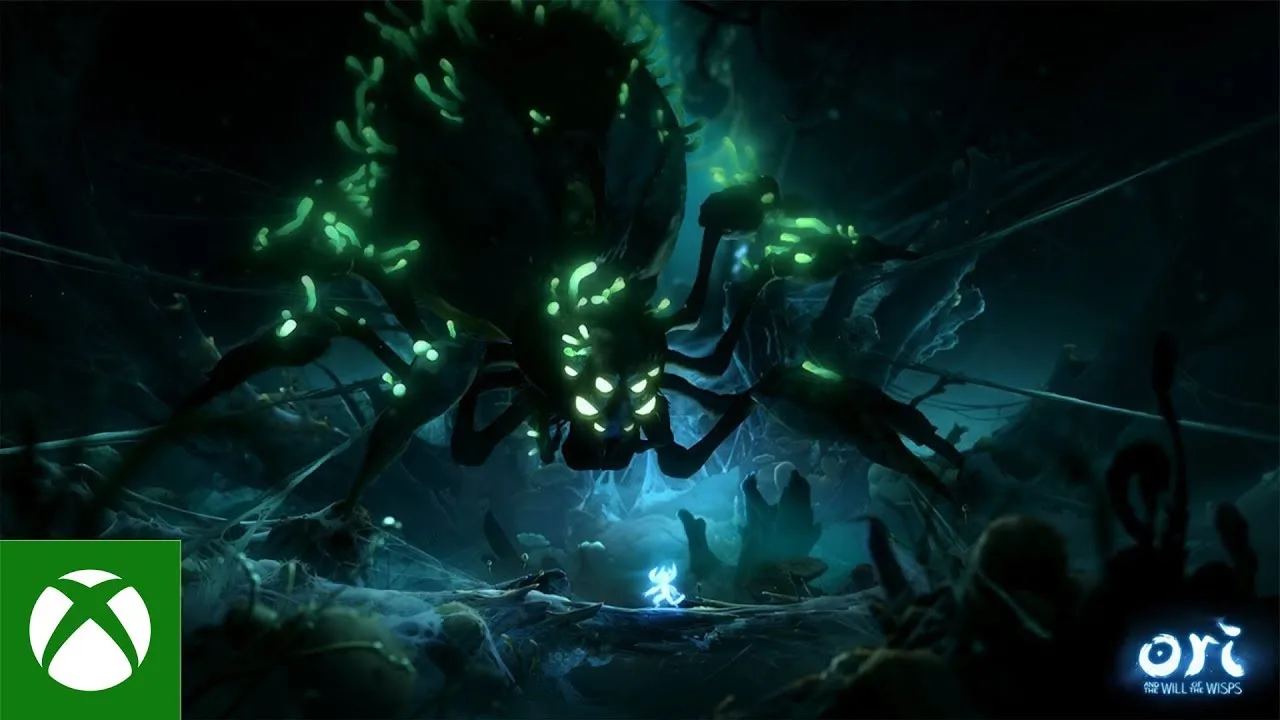 Image: YouTube / XBOX
That disagreement matters. The player video criticizes Ori’s weapon balance, while a Steam participant specifically prefers its combo-oriented combat. Neither preference automatically makes the other approach less enjoyable.
| Combat element | Ori: player experience from the sources | Hollow Knight: player experience from the sources |
|---|---|---|
| Basic toolkit | Several weapons with different uses | Nail attacks supported by spells |
| Resource considerations | The supplied accounts do not explain enough for a detailed resource comparison | The player video explains that spells consume Soul |
| Balance | The video criticizes uneven weapon usefulness | The video praises the balance between nail attacks and spells |
| Encounter emphasis | Combat appears alongside prominent traversal sequences | The sources emphasize enemy variety and boss encounters |
The player video explains that Hollow Knight’s nail has limited reach, while spells offer greater reach and generally higher damage at the cost of Soul. That creates a concrete distinction between an attack available without that resource cost and an option that requires resource management.
A good approach is to assess both positioning and spell use when evaluating Hollow Knight’s combat. Focusing only on repeated nail attacks would overlook part of the system described in the source.
For Ori, a good approach is to compare how its different weapons feel in encounters before accepting the video’s criticism of their balance. The forum’s opposing preference shows that the same variety can be appealing to another player.
Boss Duels and Escape Sequences
In the Ori and the Will of the Wisps vs Hollow Knight boss comparison, the player video gives Hollow Knight a substantial advantage. It praises encounters such as Mantis Lords and considers the overall lineup more memorable.
The same video treats Ori’s escape sequences as a separate strength. These involve being chased by a creature or environmental threat, making traversal under pressure the main challenge. Some boss encounters also incorporate escape segments, according to that player experience.
Counting escapes as conventional boss fights would blur the comparison. A chase tests rapid movement through a route; a duel emphasizes responding to an opponent. Consider which kind of pressure you enjoy before treating boss quantity as the deciding factor.
Story, Art, and Music: Two Ways to Build Atmosphere
The story comparison is less about complexity than delivery. The player video describes Ori’s narrative as straightforward and emotionally effective. Characters communicate objectives clearly, and the story makes its central relationships easier to follow.
 Image: YouTube / MKIceAndFire
Hollow Knight receives praise for a narrative assembled through investigation and interpretation. The video’s creator says an explanatory lore video helped them understand it. That account illustrates the appeal of discussing the story beyond the game, while also showing that its presentation can leave questions unresolved.
The Steam community reports reflect this split. One participant prefers Hollow Knight’s atmosphere and lore; another values Ori’s clearer emotional journey.
| Presentation element | Ori: reported player experience | Hollow Knight: reported player experience |
|---|---|---|
| Narrative delivery | Direct storytelling and accessible emotional stakes | A less explicit narrative that invites interpretation |
| Visual character | Lush environments and a strong connection to natural imagery | Distinctive cartoon-style art and atmospheric locations |
| Musical appeal | Escape-sequence soundtrack praised in the player video | Music favored by a participant in the Steam discussion |
| Overall preference | Several supplied comments favor its presentation | Other supplied comments favor its atmosphere and music |
For readers comparing Ori and the Will of the Wisps vs Hollow Knight primarily for story, the useful question is how much interpretation you want to undertake. A clear narrative can make character relationships immediately engaging. A less explicit one can keep you thinking about an environment after leaving it.
A good approach is to choose according to whether uncovering meaning sounds enjoyable or burdensome. Both storytelling preferences appear in the supplied discussion.
Music and Visual Performance
The player video praises the soundtrack accompanying Ori’s escape sequences. Steam participants disagree about musical preference, with different comments favoring each game. Those player experiences establish differing tastes, but they do not establish a community-wide winner.
The video also reports frame-rate issues with Ori on Nintendo Switch and steadier performance with Hollow Knight on that platform. This is a player experience from that source, not a verified assessment of current versions or every system.
If performance influences your decision, treat that account as a reason to check information specific to your intended platform and version. It is too limited to support a broad claim that either game always runs better.
Content, Completion Time, and Making Your Choice
The supplied Steam community reports describe Hollow Knight as longer and containing more content than Ori. A participant who prefers Ori nevertheless wishes its adventure lasted longer, while another values Hollow Knight enough to replay it.
These accounts describe individual experiences rather than standardized completion measurements. They should not be used to promise how long either game will take you.
| Time-related observation | Source context | What it establishes |
|---|---|---|
| Ori: finished by a participant who struggled to stay interested in Hollow Knight | Steam community report | That participant’s differing engagement with the games |
| Hollow Knight: replayed by a participant who preferred its atmosphere and lore | Steam community report | Replay appeal for that participant |
| Ori: described as shorter by a participant who wished it lasted longer | Steam community report | A shorter adventure remained appealing to that participant |
| Hollow Knight: longer, with replay appeal | Supplied Steam discussion | Some participants valued spending more time in its world |
The Ori and the Will of the Wisps vs Hollow Knight value question therefore depends on what you want from that time. Additional content is appealing if exploration and repeated combat remain satisfying. A shorter adventure can be appealing if you prefer a more concentrated experience.
One Steam participant says they finished Ori but struggled to stay interested in Hollow Knight. Another reports replaying Hollow Knight and preferring its atmosphere. These contrasting player experiences are more useful than treating hours alone as a quality score.
Turn the Comparison Into a Decision
A good approach is to connect your choice to the features the sources actually describe:
- If movement attracts you: Give more weight to the reports about Ori’s flowing traversal and ability-based platforming.
- If boss encounters attract you: Give more weight to the player video’s praise for Hollow Knight’s combat and boss lineup.
- If story clarity matters: Consider the accounts of Ori’s direct narrative.
- If interpretation matters: Consider the accounts of Hollow Knight’s lore and less explicit storytelling.
The Steam discussion includes preferences for both games, with participants emphasizing different reasons for their choices. Those contrasting player experiences show why a comparison of individual features cannot determine which adventure will hold your attention.
For Ori and the Will of the Wisps vs Hollow Knight, the supplied evidence supports different strengths rather than a universal purchase order. Match those strengths to the activities you want to spend time doing.
FAQ
Which game should I choose in Ori and the Will of the Wisps vs Hollow Knight?
A good approach is to prioritize your preferred activity. The supplied player experiences favor Ori for flowing platforming and Hollow Knight for combat and boss encounters. Story presentation provides another useful distinction.
Is Hollow Knight harder than Ori and the Will of the Wisps?
One Steam community report explicitly describes Hollow Knight as harder and more focused on fighting. Treat that as player experience rather than a universal difficulty measurement. The sources also describe demanding platforming and escape sequences in Ori.
Does Ori have weaker combat?
The player video criticizes Ori’s weapon balance and prefers Hollow Knight’s combat. A Steam participant prefers Ori’s combo-oriented approach. The supplied opinions differ, so there is no supported consensus that everyone will find Ori’s fighting less enjoyable.
Which game takes longer to complete?
The supplied Steam community reports describe Hollow Knight as longer and containing more content. These are player experiences, not standardized campaign measurements. They support a general comparison of the participants’ time commitments without establishing an expected completion time for either game.
Continue with
 Ori and the Will of the Wisps vs Ori and the Blind ForestCompare both Ori games on combat, platforming, difficulty, exploration, and story, with clear distinctions between mechanics and player opinions.
More in Reviews
Ori and the Will of the Wisps ending explained: Final Scenes
Understand Ori’s transformation, Ku’s recovery, Shriek’s final scene, the narrator reveal, and what the last glowing leaf means in the ending.
Ori and the Will of the Wisps review: Combat and Exploration
An Ori and the Will of the Wisps review covering combat, exploration, platforming, Spirit Shards, checkpoints, and reported Switch performance issues.
Join the community
Official channels for news, updates and player help: