
Ori and the Will of the Wisps review: Combat and Exploration
An Ori and the Will of the Wisps review covering combat, exploration, platforming, Spirit Shards, checkpoints, and reported Switch performance issues.
Jump to
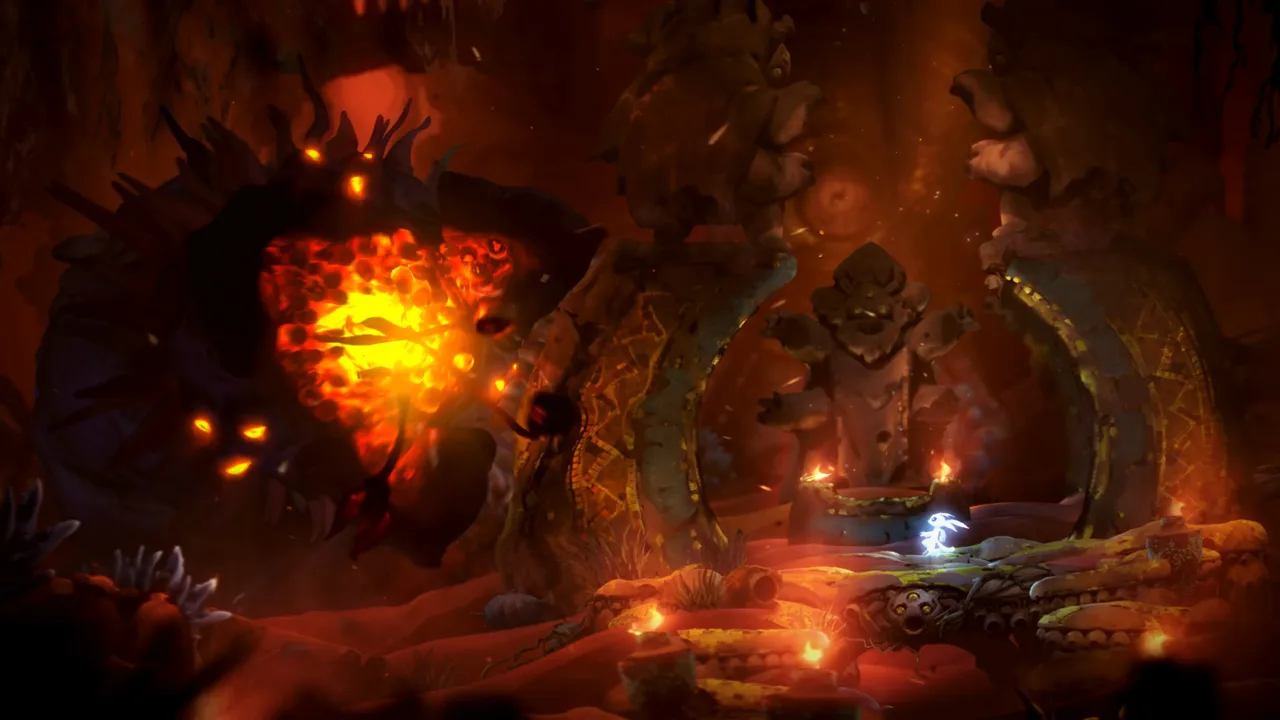
A Beautiful Sequel With Meaningful Changes
A gorgeous forest can draw you into a game, but movement and level design determine whether you want to stay. This Ori and the Will of the Wisps review examines how the sequel connects its visual appeal with combat, exploration, and demanding platforming. If you are deciding whether those strengths outweigh its frustrations, this Ori and the Will of the Wisps review also separates the design improvements from the technical issues documented in the supplied reviews.
The central takeaway is that the sequel expands the original’s ideas in meaningful ways. Combat offers more direct control, upgrades give exploration a practical purpose, and automatic checkpoints soften the cost of mistakes. Meanwhile, its painterly environments and orchestral music support an adventure that both sources describe with strong enthusiasm.
That praise needs context. Boomstick Gaming’s video review presents an exceptionally positive player experience, particularly around controls and level design. Nintendo World Report’s Switch review also praises the adventure while documenting crashes, loading delays, and occasional slowdown. Neither source establishes the condition of every version today.
| Area | What the supplied reviews describe | Why it matters |
|---|---|---|
| Combat | Melee weapons and magic replace the original’s homing attack approach | Fighting involves more deliberate positioning and ability selection |
| Checkpoints | Automatic checkpoints replace manually placed respawn points | Mistakes generally interrupt the action less |
| Exploration | Hidden paths and upgrades encourage returning to earlier areas | Revisiting locations contributes to character development |
| Presentation | Painterly scenery and an orchestral soundtrack | Environments carry atmosphere as well as navigation clues |
The question running through this Ori and the Will of the Wisps review is whether these systems reinforce one another. The strongest evidence suggests they do: movement supports exploration, exploration rewards customization, and customization gives players more ways to approach obstacles.
Official source: Ori and the Will of the Wisps (xbox.com)
Combat Becomes More Expressive
The combat overhaul is one of the clearest differences from Ori and the Blind Forest. In the video’s player experience, the original’s homing ranged attack gives way to a system built around spirit weapons and energy-consuming magic.
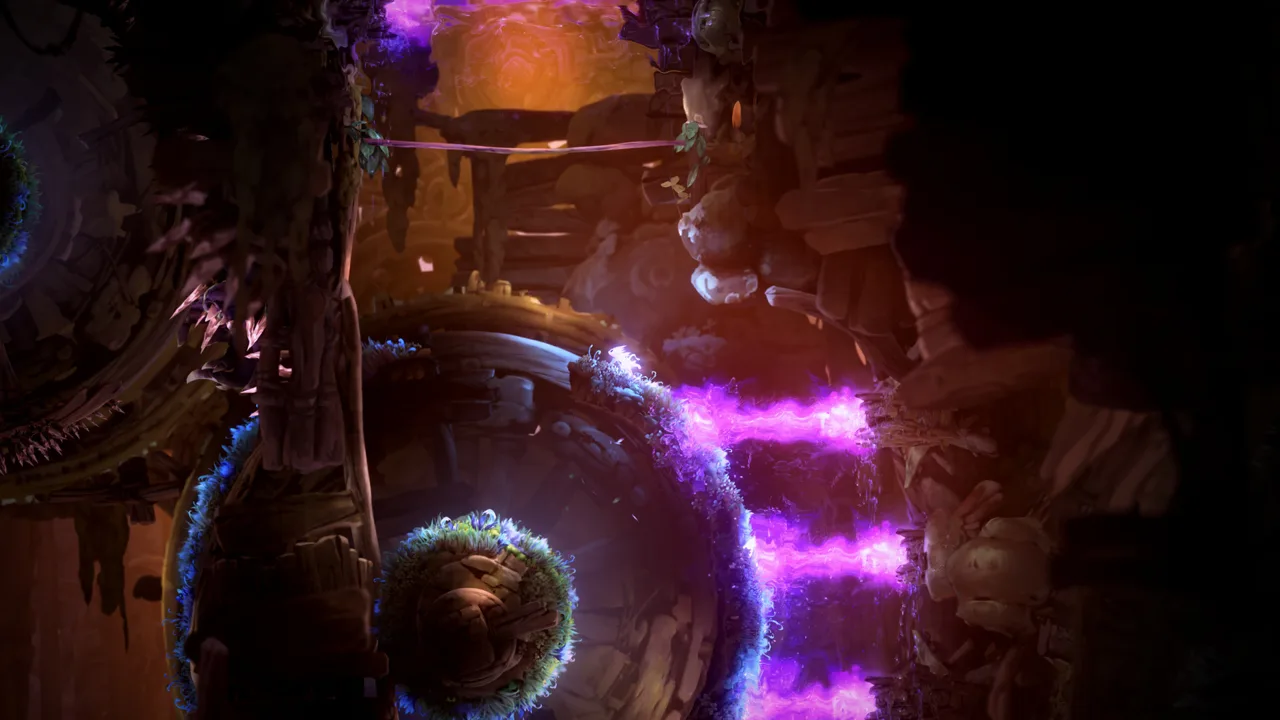 Image: Steam / Moon Studios GmbH
Weapons have different attack sequences, including upward, downward, and aerial variations. That creates a more physical relationship with enemies: where Ori stands, jumps, or lands becomes part of the attack itself.
The same player experience describes combat as a matter of moving into and out of danger while managing distance. That distinction matters because beautiful animation alone cannot make encounters engaging. Attacks need to connect with the movement system, and the video specifically praises that connection.
| Combat feature | Detail from the video’s player experience | Practical implication |
|---|---|---|
| Spirit weapons | Different weapons provide different attack sequences | A good approach is to learn a weapon’s directional and aerial options |
| Spirit magic | Spells consume energy and can be upgraded | Consider their resource cost alongside their effects |
| Ability assignments | Three buttons can hold weapons or magic | Think deliberately about which abilities you keep accessible |
| Healing ability | Healing can occupy one of those assignments | Consider how healing fits alongside your offensive choices |
These are assignment slots, not universal keyboard or controller bindings. The supplied material does not specify a control layout, so there is no basis for prescribing particular keys.
The video also says abilities can be reassigned during battle. Its reviewer sees this as convenient, although it reduces the commitment involved in choosing a setup. You have flexibility, but your initial arrangement does not carry the full consequence it would have if encounters locked it in place.
A good approach is to experiment with a manageable selection of abilities and learn their spacing before frequently changing assignments. That advice follows directly from the reported weapon variety and emphasis on positioning.
For this Ori and the Will of the Wisps review, the combat improvement is about integration as much as variety. The video’s player experience suggests that weapons and spells enrich the movement without making fighting feel detached from the rest of the adventure.
Platforming, Exploration, and the Cost of Failure
Platforming remains central to the sequel’s identity. The video’s player experience praises intricate jumping challenges and larger set pieces, with quieter stretches devoted to examining the map and finding upgrades.
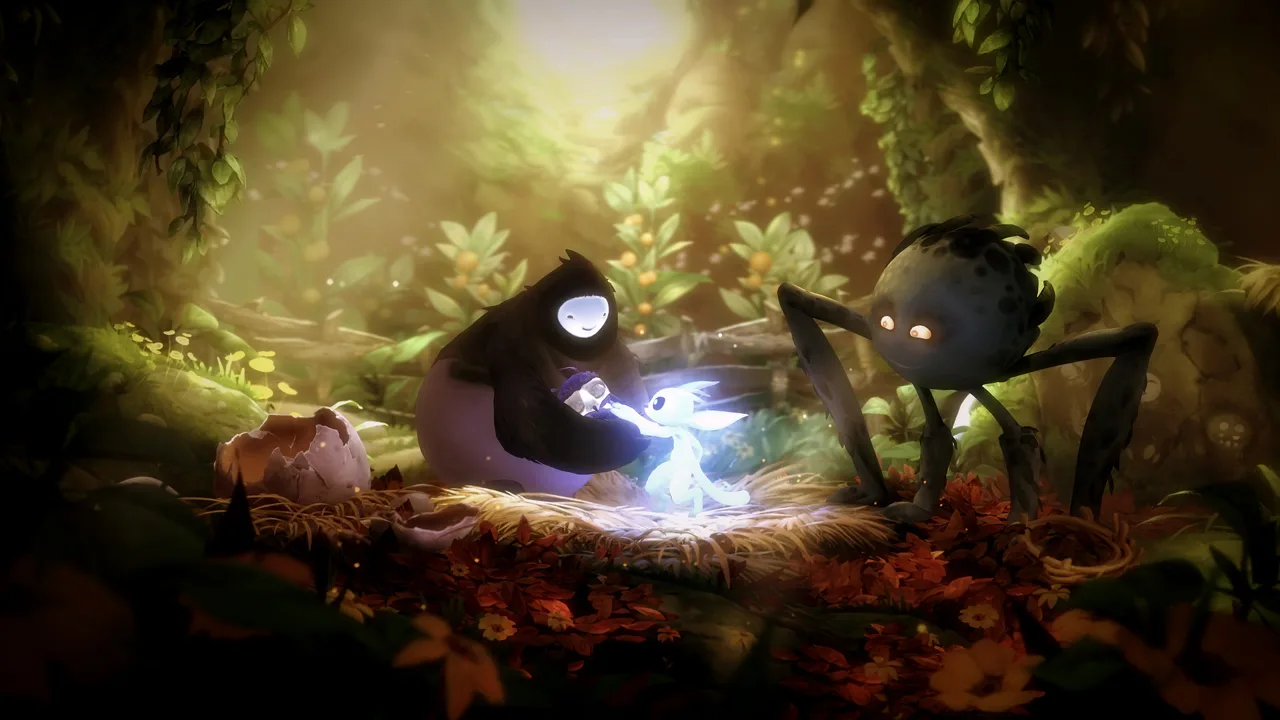 Image: Steam / Moon Studios GmbH
Those changes in pace matter. Constant dexterity tests could make the world feel like an obstacle course. Exploration gives the player room to study environments, notice inaccessible routes, and anticipate what a new ability might make possible.
Nintendo World Report describes visual details in the foreground and background that help orient the player. Hidden caves and optional paths are woven into the scenery, while distinctive locations make areas easier to recognize when returning.
This is an important part of the art direction’s value. A recognizable waterwheel or contrasting environment does more than provide a striking backdrop; it can become a useful landmark in an interconnected world.
A good approach is to remember conspicuous barriers and environmental landmarks when you cannot reach a route. The media review specifically describes visual clues that encourage returning with new abilities. It does not provide exact unlock requirements, so a review should not turn those observations into an invented route guide.
The checkpoint change also deserves attention. In the video’s player experience, death usually returns Ori to a point only seconds earlier. The reviewer characterizes the resulting challenge as learning enemy behavior and environmental layouts with relatively little penalty.
That supports a useful distinction: forgiving recovery can coexist with demanding execution. A difficult jump still requires timing, even when failure does not erase a long stretch of progress.
However, Nintendo World Report criticizes the returning chase sequences, where a missed jump can cause instant death. Automatic saving cannot remove the frustration of repeatedly missing the same movement under pressure.
This Ori and the Will of the Wisps review therefore treats checkpoints and chase sequences as related but separate issues. Checkpoints improve recovery; the chase sequences still ask for precise execution that the Switch reviewer found frustrating.
A good approach during a repeated escape attempt is to focus on the obstacle that caused the failure. That follows from the reported short recovery loop and avoids treating every attempt as an entirely new problem.
Spirit Shards Make Exploration More Rewarding
Spirit Shards connect exploration with customization. Nintendo World Report explains that shards can be purchased or discovered in the world, that only a limited selection can be equipped at once, and that their capabilities can be upgraded.
 Image: Steam / Moon Studios GmbH
The media review gives concrete examples: a shard can enable automatic wall clinging, while another can increase damage at the cost of taking more damage. These effects let players adjust how Ori handles traversal or combat.
| Shard detail | Supported example or rule | Editorial tip |
|---|---|---|
| Acquisition | Shards can be bought or found while exploring | Consider optional routes as opportunities to expand your choices |
| Equipment limit | Only a selection can be active at once | Choose effects that address the obstacle you are facing |
| Movement effect | A shard can allow automatic wall clinging | Consider it if managing wall movement is causing difficulty |
| Combat tradeoff | A damage-boosting shard also increases damage taken | Weigh the offensive benefit against your ability to avoid attacks |
These tips follow from the mechanics described in the media review. They are not a claim that one setup is universally optimal, and the supplied sources do not establish a complete build guide.
The video’s player experience adds that shard combinations allow flexible playstyles and satisfying upgrade moments. It also describes expanding equipment capacity as rewarding, although the transcript does not establish the requirements for doing so.
The broader appeal is that exploration produces meaningful choices. Discovering an upgrade can change how you approach a situation, rather than merely adding another entry to a collection.
That connection is central to this Ori and the Will of the Wisps review. The video’s reviewer found the collectible rewards worthwhile and said the game’s return visits made gathering nearby upgrades appealing. This is an individual player experience, not evidence that every player will want to complete every optional activity.
Nintendo World Report acknowledges similarities with Hollow Knight’s customization while emphasizing Ori’s own balance of traversal, puzzles, and combat. The comparison helps explain the system, but it does not establish that one game objectively handles the genre better.
A good approach is to revisit your shard selection when your needs change. Since the media review says shards can be swapped at any time, customization can respond to an obstacle instead of remaining fixed throughout the adventure.
Presentation and the Limits of the Switch Evidence
The supplied reviews agree strongly on presentation. Nintendo World Report describes distinct environments ranging from lush forest scenery to warm light in the Glades and decay around Shriek’s lair. It also praises the orchestral soundtrack.
Environmental variety matters beyond spectacle. Distinct colors, lighting, and landmarks help locations retain their identity as the player moves through the connected world.
The video’s player experience similarly praises the soundtrack, tight controls, and emotional range of the story. Its reviewer describes a mixture of warmth and despair, while noting that knowledge of Ori and the Blind Forest adds context to some moments.
Technical performance requires more careful wording. The Nintendo World Report review of Ori and the Will of the Wisps on Switch reports the following observations:
| Switch observation | What the media reviewer reported | Limit of the evidence |
|---|---|---|
| Frame rate | 60 FPS in handheld and docked modes | Occasional slowdown was also reported |
| Startup loading | About a minute before starting | This is a reported observation, not a current benchmark |
| Stability | Two crashes during the review experience | It does not establish how frequently other players encounter crashes |
| Progress recovery | Autosaving prevented notable progress loss | Restarting still required another loading wait |
These details make the Switch assessment more useful than an unqualified statement that it runs perfectly. The review documents an impressive presentation alongside interruptions that affected the reviewer’s experience.
The supplied material does not establish which game build was tested or confirm subsequent fixes. This Ori and the Will of the Wisps review therefore cannot promise that those issues remain present—or have disappeared—on a current installation.
The evidence supports a strong assessment of the adventure’s design, with narrower conclusions about platform performance. Combat, movement, customization, and atmosphere receive sustained praise across the two reviews. Chase sequences and reported Switch interruptions are the clearest reservations.
FAQ
What is the main conclusion of this Ori and the Will of the Wisps review?
The supplied reviews strongly praise its platforming, exploration, combat improvements, art, and music. The principal reservations are frustrating chase sequences and technical problems documented in the Switch review, including occasional slowdown and crashes.
Do you need to play Ori and the Blind Forest beforehand?
The video’s player experience says the original is not essential to enjoying the sequel’s story, but it provides context for some moments. Playing it beforehand can therefore add background without being a stated prerequisite.
How does saving differ from the original game?
The video’s player experience describes automatic checkpoints replacing the original’s manually placed respawn points. Nintendo World Report also reports that autosaving prevented notable progress loss after crashes during its Switch review.
Does the Switch version run at 60 FPS?
Nintendo World Report reports 60 FPS in both handheld and docked modes, alongside occasional slowdown in large locations. That observation describes the reviewer’s experience; the supplied material does not provide a verified performance assessment of the current build.
Continue with
 Ori and the Will of the Wisps vs Hollow Knight: Play StylesCompare Ori and the Will of the Wisps and Hollow Knight through player experiences with movement, combat, bosses, story, music, and content.
More in Reviews

Ori and the Will of the Wisps ending explained: Final Scenes
Understand Ori’s transformation, Ku’s recovery, Shriek’s final scene, the narrator reveal, and what the last glowing leaf means in the ending.
Ori and the Will of the Wisps vs Ori and the Blind Forest
Compare both Ori games on combat, platforming, difficulty, exploration, and story, with clear distinctions between mechanics and player opinions.
Join the community
Official channels for news, updates and player help: