
Ori and the Will of the Wisps abilities: Unlock and Use
Understand Ori and the Will of the Wisps abilities, skill sources, Spirit Shards, and practical ways to approach both combat and exploration.
Jump to

Understand What Your Abilities Change
An unreachable ledge can turn into an experiment once you start looking at Ori’s available tools. Understanding Ori and the Will of the Wisps abilities matters because acquiring a skill, purchasing an upgrade, and choosing a Spirit Shard are different decisions. This guide to Ori and the Will of the Wisps abilities explains the acquisition methods documented in the supplied wiki and uses a player’s exploration session to illustrate how those tools can work together.
The distinction is useful whenever you feel stuck. Are you looking for another skill, considering an optional purchase, or trying to make better use of something you already have? Those questions lead to different choices.
The references cover selected abilities rather than a complete roster. Treat the named skills below as a focused guide, not a checklist of everything Ori can acquire.
For broader information about the game, visit the official Ori game website. The specific ability details discussed here come from the community wiki’s skills overview and the linked player video.
Skills and Spirit Shards Need Separate Attention
The wiki describes skills acquired through Ancestral Trees, purchases, and story events. The player video separately shows decisions involving Spirit Shards, shard upgrades, and an ability purchase.
That separation matters when you review your options. Spending time improving shards does not tell you whether you have explored the available skill purchases. Likewise, buying another attack does not resolve every traversal problem.
A good approach is to identify the obstacle before choosing what to change:
- For a combat encounter, review the descriptions of available attacks.
- For an exploration problem, examine the movement tools already available.
- For a purchase decision, compare skills, shard upgrades, and map information.
These are ways to organize your choices, rather than a prescribed build.
Where Ori’s Skills Come From
The community wiki identifies three acquisition routes for Ori and the Will of the Wisps abilities: absorbing light from Ancestral Trees, spending Spirit Light with Opher, and receiving skills through story events.
 Image: Steam / Moon Studios GmbH
The examples below come directly from that overview. It does not provide exact locations, prices, or detailed unlock sequences.
| Acquisition route | Examples listed in the wiki | What the reference establishes |
|---|---|---|
| Ancestral Trees | Spirit Edge, Regenerate | These skills are learned by absorbing tree light |
| Purchases from Opher | Sentry | Spirit Light is used to purchase skills |
| Purchased upgrades | Sentry Speed | Opher’s offerings include upgrades |
| Story events | Flap, Glide | Some skills are acquired through the story |
This gives you a useful starting point without inventing a route through the game. If you are investigating Sentry, Opher is the documented source. If you are investigating Flap or Glide, the wiki places them under story acquisition.
The material does not explain precisely when those story events occur. It also does not describe Spirit Edge or Regenerate’s effects in the extracted overview, so their names should not be treated as a substitute for an ability description.
Read the Purchase Description Before Spending
Player experience: In the supplied video, the player visits Opher after buying a shard upgrade and considers several additional abilities. The options described include a returning star, an attacking spirit orb, and a flame attack.
That visit illustrates why checking the actual description is useful. Two attacks may both sound appealing while offering different actions. A good approach is to decide which described action you want to try before spending Spirit Light.
For Ori and the Will of the Wisps abilities, the acquisition source answers where to look. The description answers what you are choosing.
Compare the Combat Options Actually Described
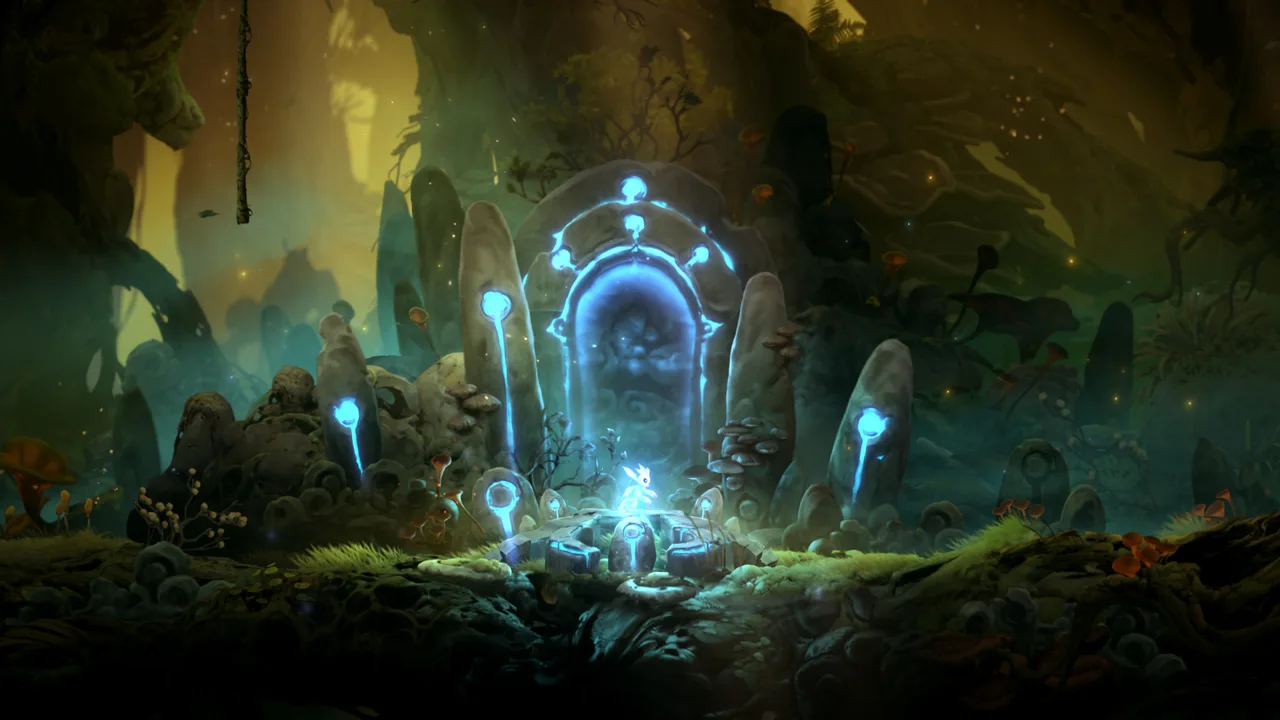 Image: Steam / Moon Studios GmbH
Player experience: The player video provides descriptions of several combat choices. During the shop visit, the player selects a flame-attack option after reading descriptions involving nearby enemies and enemies in sight.
That distinction keeps the comparison useful: a menu description supports the stated action, while a combat demonstration would be needed to assess its performance.
| Ability or option | Supported description | Evidence available |
|---|---|---|
| Sentry | Listed as a purchasable skill; its effect is not detailed | Opher purchase source confirmed by the wiki |
| Sentry Speed | Listed as an upgrade | Named in the wiki; its precise effect is not detailed |
| Attacking-orb option | An option creates a spirit orb that attacks for Ori | Player experience from the shop description; no ability name established here |
| Flame-attack option | A description involves a charged flame that damages and ignites enemies in sight | Player experience from the shop description |
| Returning-star option | A thrown star returns to Ori | Player experience from the shop description |
There is no supported damage ranking here. The references do not establish which attack deals more damage, which is more efficient, or which purchase should take priority.
Turn Descriptions Into Questions You Can Test
A good approach is to use each description to form a practical question. With the returning-star option, watch how its return behaves during an encounter. With the attacking-orb option, observe how the orb fits alongside your own actions. With the flame-attack option, compare the enemies affected with the scope described in its menu text.
Those suggestions follow from the actions described in the video. They are not claims about hidden interactions or guaranteed advantages.
A good approach is to assess an attack through the behavior you can observe, rather than treating a purchase decision as a recommendation. The descriptions here do not establish effectiveness against a particular enemy or boss.
When comparing Ori and the Will of the Wisps abilities, keep those two kinds of evidence separate. Knowing what an ability promises helps you choose an experiment. Seeing it work helps you evaluate the result.
Use Exploration Problems to Practice Ability Combinations
One of the most useful passages in the video concerns a collectible the player cannot initially reach. They try different approaches involving jumping, dashing, nearby terrain, an enemy, and Light Burst.
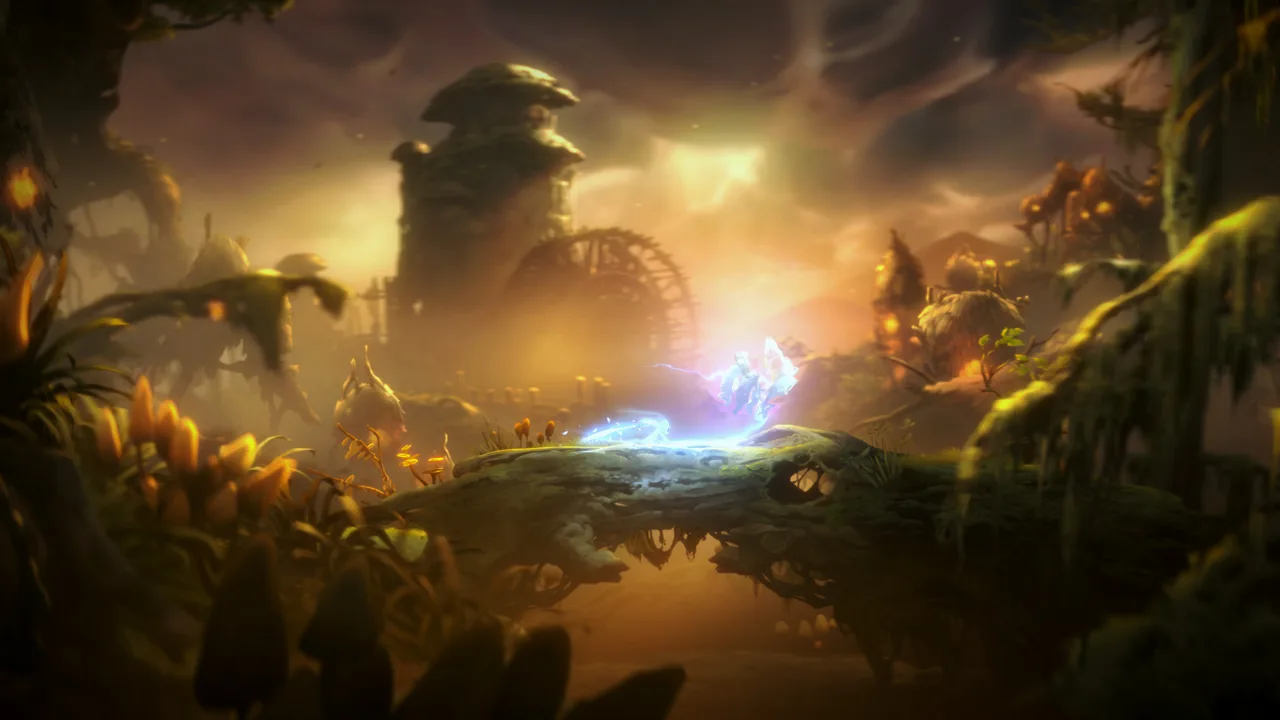 Image: Steam / Moon Studios GmbH
Player experience: The player eventually reaches the collectible after experimenting with the nearby enemy and Light Burst. They also explicitly question whether their solution was the intended route.
That makes the sequence an example of exploration through experimentation, not a verified walkthrough.
| Tool or environmental feature | What happens in the player video | Practical takeaway |
|---|---|---|
| Triple Jump | The player says it is equipped during an unsuccessful approach | A good approach is to reassess the setup when the equipped option does not get you there |
| Dash | The player considers crossing toward the collectible from another direction | A good approach is to compare possible approaches before repeating one jump |
| Nearby enemy | The player investigates whether it can help them gain height | A good approach is to include interactive elements in your assessment |
| Light Burst | It becomes part of the successful experiment | A good approach is to consider combinations rather than testing every tool in isolation |
The video also shows the player checking water in an earlier area after gaining additional underwater abilities. They do not find anything new during that particular check.
A good approach is to revisit an unresolved obstacle when your relevant tools change. However, an additional ability does not prove that every previously explored corner contains something new.
Change One Part of the Attempt
The collectible sequence suggests a useful way to practice Ori and the Will of the Wisps abilities: make each attempt answer a different question.
Try another starting position. Examine a nearby object. Consider whether an enemy’s movement changes your available approach. If you repeat an attempt, identify what you are adjusting.
That gives a failed attempt some value. You learn whether a particular route or combination is promising instead of simply repeating the same movement.
Keep Experimental Solutions in Perspective
Player experience: The successful collectible grab leaves the player uncertain about the intended solution. That uncertainty belongs with the example.
Reproducing it should therefore be treated as an experiment. The transcript does not provide enough precise information to turn it into a reliable sequence of inputs, and it does not confirm that the combination works at other locations.
For your own exploration, distinguish between “this worked here” and “this is the required method.” That distinction prevents one unusual success from becoming a misleading rule.
Plan Spirit Light Spending and Collectible Cleanup
The video presents several competing uses for Spirit Light: ability purchases, shard upgrades, and collectible maps.
Player experience: The player has spent heavily on shards, encounters map offerings they cannot comfortably purchase, and chooses another shard upgrade before buying a flame-attack option. Their decisions show the tradeoff between adding tools and purchasing information.
| Spending option | What the references show | Question to consider |
|---|---|---|
| Ability purchase | Opher offers skills for Spirit Light | Which described action do you want to add? |
| Ability upgrade | The wiki lists Sentry Speed | Have you checked what the upgrade actually changes? |
| Spirit Shard upgrade | The player purchases a grapple-related upgrade | Does its description address your current obstacle? |
| Collectible map | The player considers Lupo’s map offerings | Would more information help you plan your search? |
No universal purchase order follows from this episode. The player’s preferences are their own, and the reference does not compare the long-term value of every option.
A good approach is to choose according to your immediate task. If you want to experiment with combat, review a skill description. If you are searching for remaining collectibles, investigate the information available to you.
Map Knowledge Can Change Your Search
Player experience: During the visit to Lupo, the player discusses a map stone fragment. Lupo describes a legend connecting the map stone with hidden riches and suggests investigating the ancient ruins.
This matters when using Ori and the Will of the Wisps abilities for cleanup: reaching a collectible and discovering where it is are separate problems.
Player experience: The player also considers Lupo’s purchasable maps, but decides against buying the available energy-cell map at that point. A good approach is to check which information a map offers before spending on it, particularly when your current search concerns a different collectible.
Do Not Build Around an Unverified Shard Interaction
Player experience: The player repeatedly wonders whether the Bounty Spirit Shard affects bosses’ health and damage. They mention a commenter’s theory, but they do not verify it.
That question remains unresolved in this guide. Neither the player’s suspicion nor the commenter’s agreement establishes a boss interaction.
When reviewing Ori and the Will of the Wisps abilities alongside shards, rely on documented effects and your observed results. An uncertain interaction should remain a question until there is evidence to answer it.
FAQ
How do you unlock Ori and the Will of the Wisps abilities?
The community wiki lists three acquisition routes: Ancestral Trees, purchases from Opher using Spirit Light, and story events. Its examples include Spirit Edge and Regenerate from trees, Sentry from Opher, and Flap and Glide through the story.
Are abilities and Spirit Shards the same thing?
The supplied references discuss them separately. The wiki outlines skill acquisition, while the player video shows shard upgrades and an ability purchase as different decisions. Check which system a particular option belongs to before comparing purchases.
Does the flame-attack description establish its combat effectiveness?
No. Player experience: The shop visit includes a description of a charged flame that damages and ignites enemies in sight. That description supports the stated action, not a damage ranking or recommendation against specific enemies.
Does Bounty make bosses stronger?
The supplied material does not settle that question. Player experience: The player suspects a boss interaction and mentions a commenter who agrees, but neither verifies it. Treat the effect on bosses as unresolved.
Continue with
 Ori and the Will of the Wisps best shards: Five Shard PicksExplore Ori and the Will of the Wisps best shards, where to find them, their upgrade costs, and practical tips for choosing your passive bonuses.
More in Abilities
Ori and the Will of the Wisps best skills: What to Buy First
Compare Ori's abilities, Spirit Light costs, and energy tradeoffs to prioritize Spirit Smash, Spike, Triple Jump, and useful exploration upgrades.

Ori and the Will of the Wisps burrow ability location: Guide
Find Burrow in Windswept Wastes at the Ancestral Tree, understand its Dash requirement, and learn how to move through sand and launch back into the air.

Ori and the Will of the Wisps dash ability location: Guide
Find Dash in Kwolok's Hollow, follow the water and switch puzzles along the route, and reach the spirit tree that unlocks ground and air dashing.
Join the community
Official channels for news, updates and player help: