
Ori and the Will of the Wisps Inkwater Marsh map: Tree Guide
Explore Inkwater Marsh, the first area, with a guide to its four ability Trees, Spirit Shards, map seller, weapon vendor, and collectible map markers.
Jump to
Understanding the Inkwater Marsh Map
A branching path is easier to assess when you know what you’re looking for on the Ori and the Will of the Wisps Inkwater Marsh map. This opening region matters because its ability Trees and Spirit Shards expand your options as you explore. Use the Ori and the Will of the Wisps Inkwater Marsh map to distinguish ability pickups, collectible fragments, and useful NPC encounters before choosing your next destination.
Inkwater Marsh is the first area you explore in Ori and the Will of the Wisps. Its paths introduce a central exploration pattern: collecting abilities and Spirit Shards lets you explore more of the region. An unfinished branch can therefore be something to revisit as your options expand.
The map’s useful categories include Trees, Spirit Shards, Life Cell Fragments, Energy Cell Fragments, and Spirit Wells. Keeping those categories separate makes it easier to decide whether you’re looking for an ability, a shard, or another marked destination.
For the illustrated layout and visual item positions, consult Polygon’s Inkwater Marsh map and item-location guide. That media guide provides the map underlying the inventory below. Use its image for exact placement and this guide to understand the named pickups and plan your exploration.
| Map category | What the reference identifies | How to use it while planning |
|---|---|---|
| Trees | Four Trees that provide named abilities | Keep a checklist of the abilities you have collected |
| Spirit Shards | Magnet, Sticky, Resilience, and Reckless | Connect each shard name with its described effect |
| Life Cell Fragments | Fragment locations marked on the map | Record which marked pickups remain uncollected |
| Energy Cell Fragments | Fragment locations marked on the map | Track these separately from Life Cell Fragments |
| Spirit Wells | Well locations marked on the map | Use their labeled positions when comparing locations |
A good approach is to begin with a specific objective. “Find an ability Tree” is easier to work toward than “finish the marsh,” especially when several branches remain unexplored. Once that objective is complete, reassess the map with your new ability or shard in mind.
The Ori and the Will of the Wisps Inkwater Marsh map is especially useful as a reference you return to. Treat it as a record of discoveries and unresolved paths, rather than a demand to collect every marked item immediately.
The Four Ability Trees in Inkwater Marsh
Inkwater Marsh contains four Trees that give Ori Spirit Edge, Double Jump, Regenerate, and Spirit Arc. These are useful names to recognize when comparing your current abilities with the region’s map.
 Image: Steam / Moon Studios GmbH
Polygon identifies Spirit Edge as the sword ability and Spirit Arc as the bow ability. Its accompanying text also names Double Jump and Regenerate, but does not provide a detailed explanation of their mechanics or a complete route between all four Trees.
That distinction matters when following a map guide. A list of abilities tells you what is available in the region; it does not automatically establish the order in which every Tree must be visited.
| Tree ability | Description supported by the reference | What to record |
|---|---|---|
| Spirit Edge | Sword ability | Whether you have collected its Tree |
| Double Jump | One of the four abilities available from Trees | Whether this ability is still missing |
| Regenerate | One of the four abilities available from Trees | Whether its Tree remains on your checklist |
| Spirit Arc | Bow ability | Whether you have collected its Tree |
When using the Ori and the Will of the Wisps Inkwater Marsh map, compare these four names against the abilities you have already acquired. This gives you a clear inventory without needing to remember every corridor you have visited.
A good approach is to revisit an unresolved branch after gaining an ability. The source explicitly connects new abilities and Spirit Shards with expanded exploration, so reviewing earlier paths follows that established pattern. It does not mean that every blocked passage opens after every pickup.
Keep your notes concrete. Instead of recording only “stuck here,” describe what you can see: an unexplored branch, a visible pickup you have not reached, or a passage you stopped following. Those observations will be more useful when you return.
Avoid treating visual proximity as proof of access. A Tree marker can help identify a destination, but the supplied text does not describe the precise approach to each Tree. Check the illustrated layout and your current surroundings before committing to a direction.
You can also separate your ability checklist from your collectible checklist. That keeps an uncollected fragment from becoming confused with a missing Tree and makes your next objective easier to choose.
The Four Spirit Shards and Their Effects
The four Spirit Shards identified in Inkwater Marsh are Magnet, Sticky, Resilience, and Reckless. Their names are worth tracking separately from Tree abilities because the reference describes them as a different category of pickup.
 Image: YouTube / Lara Loft
Magnet pulls enemy drops toward Ori from farther away. Sticky makes Ori stick to walls. Resilience and Reckless affect damage dealt and damage taken, although the supplied guide text does not specify their individual numerical values or exact damage formulas.
| Spirit Shard | Effect described in the reference | Detail to keep in mind |
|---|---|---|
| Magnet | Pulls in enemy drops from farther away | Its described effect concerns collecting drops |
| Sticky | Makes Ori stick to walls | Its described effect concerns wall interaction |
| Resilience | Changes damage dealt or taken | Exact values are not supplied |
| Reckless | Changes damage dealt or taken | Exact values are not supplied |
The Ori and the Will of the Wisps Inkwater Marsh map helps you identify these shard destinations, while their effects help you understand why each pickup deserves its own checklist entry.
For Magnet, a useful tip is to pay attention to enemy drops after acquiring it. Its described purpose gives you something specific to observe, instead of treating it as an unexplained collectible.
For Sticky, a good approach is to reconsider wall-related exploration after obtaining it. Because the shard changes how Ori interacts with walls, previously inspected wall sections are sensible places to review. Whether a particular passage becomes accessible still depends on the situation.
For Resilience and Reckless, check the game’s descriptions before making a damage-related decision. The reference establishes that both influence damage, but it does not support a precise comparison, percentage calculation, or ranking between them.
This also prevents a common guide-reading mistake: assuming that similarly described items do exactly the same thing. Here, the source groups both shards under damage effects without providing enough detail to make them interchangeable.
Keep your shard notes simple:
- Record the shard’s exact name.
- Mark whether you have collected it.
- Add the effect described in the reference.
- Keep unanswered mechanical questions separate from confirmed information.
That gives you a useful record without building your exploration plan around unsupported assumptions.
Lupo, Opher, and Other Marked Destinations
The reference highlights two NPCs in Inkwater Marsh: Lupo and Opher. They serve different purposes, so recognizing their names helps you connect an encounter with your current objective.
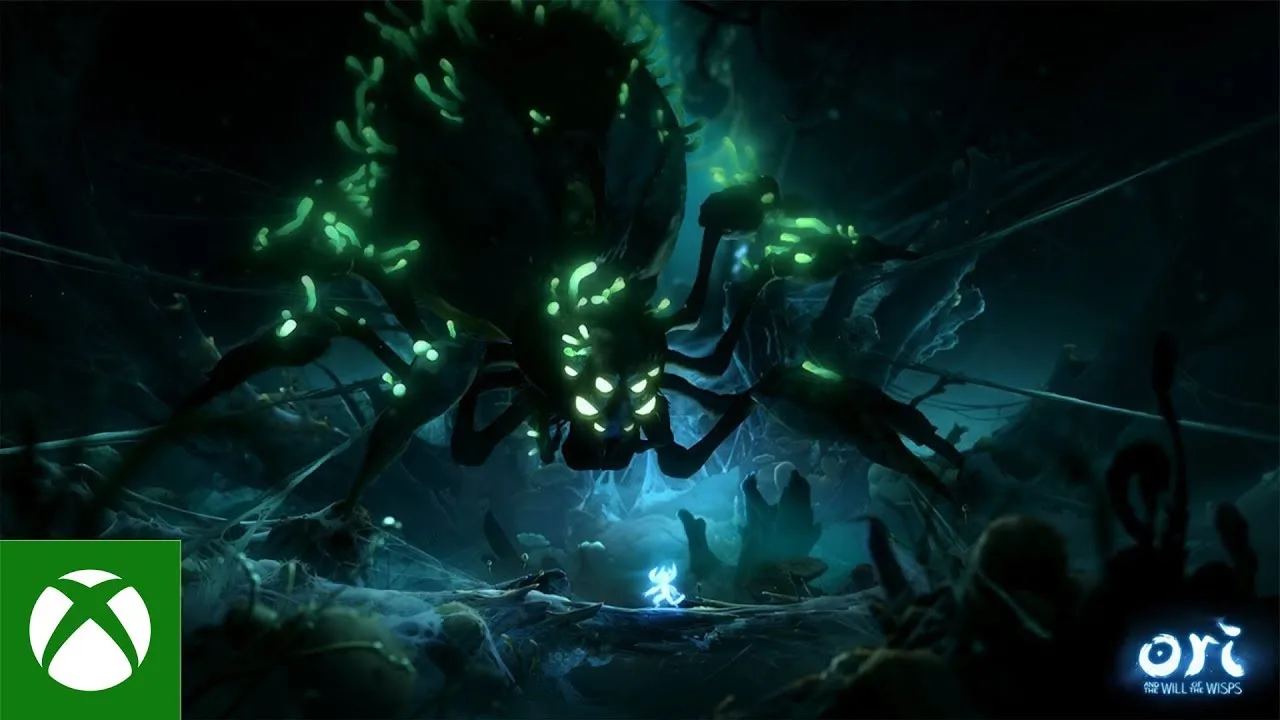 Image: YouTube / XBOX
Lupo sells a map of the area. Opher sells additional offensive weapons beyond Spirit Edge. The supplied material does not list prices, Opher’s individual weapons, or purchase requirements.
| NPC | Service identified in the reference | Reason to remember the encounter |
|---|---|---|
| Lupo | Sells the area map | Useful when your immediate goal is understanding the region’s layout |
| Opher | Sells additional offensive weapons beyond Spirit Edge | Useful when reviewing available offensive options |
If navigation is your immediate problem, Lupo’s service directly addresses that need. A good approach is to remember where you encountered him and check his map offering when you want more help interpreting the region.
Opher belongs on a different kind of checklist. His service concerns offensive weapons, so do not confuse his encounter with collecting one of the four ability Trees. Both may matter to your exploration, but the source describes distinct ways of obtaining those options.
The Ori and the Will of the Wisps Inkwater Marsh map also marks Life Cell Fragments, Energy Cell Fragments, and Spirit Wells. These categories deserve separate notes even though the supplied text does not give their totals or detailed mechanics.
For fragments, recording “collected” or “still visible on my checklist” is sufficient. You do not need to invent a regional total to make progress. Keeping Life and Energy entries separate will make a later review clearer.
For Spirit Wells, use the illustrated positions as map references. This source identifies their locations but does not explain saving, travel, or other interactions, so those mechanics should not be inferred from the map alone.
A Practical Plan for Exploring the Marsh
A useful exploration plan combines the map’s named destinations with what you have actually discovered. It does not require an elaborate route or an unsupported promise that every collectible can be reached on your first visit.
Start by reviewing the Ori and the Will of the Wisps Inkwater Marsh map alongside your ability and shard checklists. Choose one missing item or unresolved branch as your immediate objective. That gives each return to the region a clear purpose.
The following sequence is an organizational tip, rather than a required gameplay order:
- Identify your current objective. Choose an ability Tree, a shard, an NPC encounter, or a marked collectible.
- Check what you have already collected. Compare the named Trees and shards with your notes.
- Consult the illustrated layout. Use the map image to understand the destination’s position.
- Explore and record the result. Note the pickup you obtained or the branch you still could not follow.
- Review unresolved paths after new acquisitions. New abilities and Spirit Shards can expand exploration.
Be specific when an attempt remains unfinished. A note such as “visible fragment near an unexplored branch” gives you a recognizable destination. A note such as “missing something somewhere” offers little help on your next visit.
Also distinguish discovery from collection. Seeing an item on a map, reaching its general area, and actually collecting it are different observations. Your checklist should reflect what happened during play.
The reference provides firm counts for the four Trees and four named Spirit Shards. It does not provide complete totals for Life Cell Fragments, Energy Cell Fragments, or Spirit Wells in its text. Use the illustrated markers for those categories rather than guessing a completion target.
The Ori and the Will of the Wisps Inkwater Marsh map becomes more useful as your notes become more precise. Tracking named pickups and reviewing earlier branches gives you a practical way to navigate the opening region without relying on invented coordinates or unlock instructions.
FAQ
What does the Ori and the Will of the Wisps Inkwater Marsh map show?
Polygon’s illustrated map marks Trees, Spirit Shards, Life Cell Fragments, Energy Cell Fragments, and Spirit Wells. Its accompanying guide also identifies Lupo as the area’s map seller and Opher as a seller of additional offensive weapons.
Which abilities can you get from Trees in Inkwater Marsh?
The four Tree abilities are Spirit Edge, Double Jump, Regenerate, and Spirit Arc. The reference identifies Spirit Edge as the sword ability and Spirit Arc as the bow ability.
Which Spirit Shards are found in Inkwater Marsh?
The guide lists Magnet, Sticky, Resilience, and Reckless. Magnet attracts enemy drops from farther away, Sticky makes Ori stick to walls, and Resilience and Reckless affect damage dealt or taken.
Should you revisit unexplored paths after getting new abilities?
A good approach is to review unresolved paths after collecting an ability or Spirit Shard, since these acquisitions can expand exploration. The reference does not specify which ability opens each individual passage, so use your current surroundings and the illustrated map to assess each return.
Continue with
 Ori and the Will of the Wisps interactive map: Route GuideExplore Niwen with map filters for collectibles, Spirit Wells, Lupo, and more, plus practical tips for planning your routes and return visits.
More in Map

Ori and the Will of the Wisps energy cell locations: Guide
Find the listed energy cell fragment regions in Ori and the Will of the Wisps, learn how fragments increase energy, and track your own search.

Ori and the Will of the Wisps Gorlek ore locations: Guide
Find the documented Gorlek Ore locations in Inkwater Marsh, understand Grom's construction costs, and organize your exploration of the region.
Ori and the Will of the Wisps map: Niwen Interactive Tools
Use Niwen’s interactive map to organize collectibles, locate structures, and plan routes with filters, custom markers, and language options.
Join the community
Official channels for news, updates and player help: